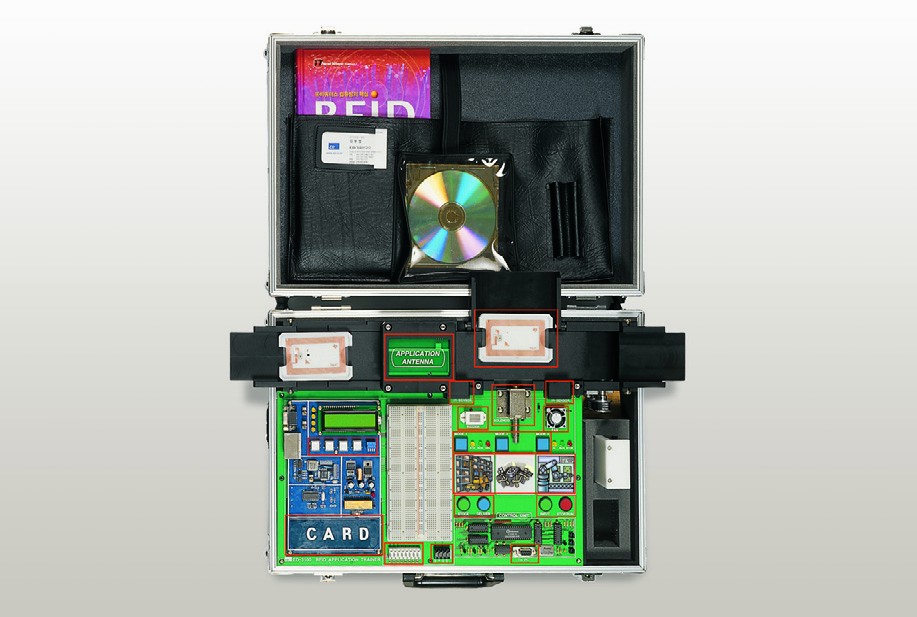
RFID Application Trainer ED-3100

Cod: ED-3100


Brosura produs PDF, 0.9 Mb

Descriere

CONFIGURATION

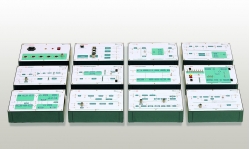
  • ED-1450 : PC Based RFID Trainer
    • Number of Modules : 2ea
    • Module Dimension : 290(W) x 210(H) x 26(D)mm
  • Required System
    • DS-1410 : Docking Station(Option)
      • Please refer to page 24 on DS-1410 specifications
    • CBIS-1400 : Computer Based Instrument System(Option)
      • Please refer to page 22 on CBIS-1400 specifications
    • Computer(Option)


Features:

  • F/W program practices for RFID Reader
  • Various types of test point for Air-interface experiments
  • Anti-collision function
  • OCX Library useful for application engineers
  • 13.56MHz I-CODE Type in common usage
  • Capability of reading and writing data on Tag
  • Mini-Plant interlocked with conveyor(management of warehouse, process, parking lot, etc.)
  • Application modules for easy mounting and demounting (Management of dntrance & exit, logistics, vending machine, etc.)


TOPICS COVERED

  • Development Environment(AVR, JTAG, Compiler)
  • ED-3100 Configuration and Operation
  • AVR Device through sample exercises
  • I-CODE1 Label IC
  • SLRC400 Reader IC
  • OCX(Examples)
  • Unselceted Commands
  • Anti-collision and Selected Commands
  • Write, Selected, Addressed Commands
  • Other Commands(Selected read, Halt, EAS/Quiet)
 

Alte produse ED

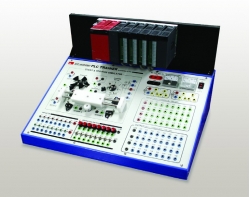
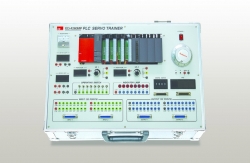
SMALL DESKTOP TYPE PLC TRAINER ED-4260MD

• Small desk type structure for space optimization
• Built-in DC power supply for convenience
• Handy experiments on the basic and application programming commands
• Base structure capable of expansion by mounting the special modules


DC SERVO TRAINER ED-4400B

• Analog feedback loop & DC servo system
• Modularized by the function of servo circuits
• Overload protection for the servo amp's and power supply's output


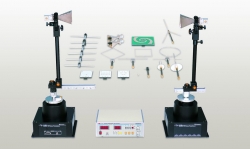
ANTENNA TRAINER ED-3200

• 16 different types of Antenna
• RF source generation : 500MHz, 2GHz and 10GHz
• Software simulation of radiation Patterns and characteristics of Antenna
• Antenna Directional Coupler (Manual / Remote)


EMBEDDED SOFTWARE DESIGN MULTI PLATFORM ED-270M

• Foundation for the Ubiquitous System Build
• Intel PXA 270 high performance processors
• 6.4TFT LCD, Ethernet 3Port, Serial 3Port, PCMCIA/CF/MMC interfaces
• FPGA Chip Altera Cyclone 4,000 LEs(12,000 LEs Option) for SoC courses
• Processor Core Board & CMOS Image Sensor


HOME NETWORK DESIGN PLATFORM ED-5965

• Designed to help develop network devices on the basis of Lon Protocol
• Control of each device installed in the field through power line communication
• Related experiments through Neuron C and MICOM programming
• Home network control in utilization of LabVIEW


UBIQUITOUS SENSOR NETWORK TRAINER ED-3160

• The optional Embedded System(ED-255EK) can be linked as a gateway
• ZigBee network can be built using TinyOS, F8WOS
• Capable of control and monitor through Ethernet
• The RFID Card Reader is supplied as a standard shipped component for applied experiments on security, home automation and robot


PULSE/DIGITAL COMMUNICATION TRAINER ED-2920

• Modularized by each communicarion type
• PAM, PTM, PCM, DPCM, ADPCM, LDM, ADM, Delta-sigma
• No need to have additional generators (built-in power supply and signal source)
• Can display the test point and measure signals using an oscilloscope


PORTABLE MITSUBISHI PLC TRAINER ED-4260MP

• Industrial training enhancement in the field of PLC and sequence control
• Various types of programming experiments covering a digital numeric program
• Aluminum case structure for storage and locomotive convenience
• Built-in DC power supply and built-in expansion port


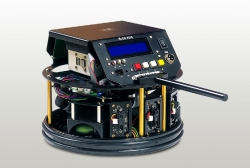
OMNI-DIRECTIONAL MOBILE ROBOT ED-7275

• Omni-directional robot system
• Microprocessor based control command as for simple use
• Floor detecting sensor and forward area detecting distance sensor as mounted
• Mountable expansion by adding the optional ultrasonic sensor and infrared sensor


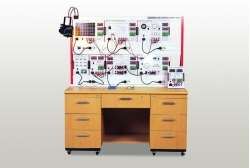
NEW & RENEWABLE ENERGY TRAINER ED-9710

• Conversion processing experiments on the produced energy(power production / processing)
• Energy efficiency experiments followed by energy production and conversion
• Voltage and current characteristics curve
• Standalone or integrated operation of the energy experimental module
• Enriched teaching aids such as simulation software for power production