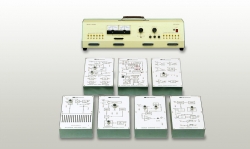
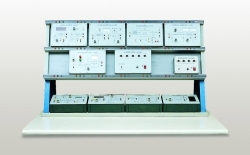
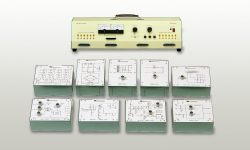
Basic Electricity & Electronics Trainer ED-1010

Code: ED-1010


Datasheet PDF, 2.01 Mb

Description

SPECIFICATIONS

  • DC Output
    • 0~20V, 2A(Connector & Terminal Output)
    • +12V, 1A(Connector & Terminal Output)
    • ±5V, 1A(Connector & Terminal Output)
    • ±15V, 1A(Connector Output)
  • AC Output
    • 24V(CT), 0.5A(Connector & Terminal Output)
    • 110V, 0.5A(Terminal Output)
    • 220V, 0.5A(Terminal Output)
  • Indication
    • Display Range : 0~20V FS AVM, 0~2A FS AAM
    • Digital Voltmeter : 20V, 20V FS(2ranges) - 2ea
    • Digital Ammeter : 0.2A, 2A FS(2ranges)
  • Protection Circuit
    • AC Output : 12V +12V(24V)(with Reset)
    • DC Output : +12V, +5V, -5V(with Reset)
  • Input Voltage : AC 220V, 50/60Hz
  • Dimension : 610(W)x205(H)x190(D)mm
  • Weight : 14kg


MODULES & MODULE STORAGE CABINET

  • No. of Modules : 20ea(including option modules : 3ea)
  • Dimension
    • (Module) : 310(W) x 32(H) x 220(D)mm
    • (Storage cabinet) : 745(W) x 920(H) x 440(D)mm
  • Total Weight : 130kg


SYSTEM REQUIREMENT

  • IBM PC-compatible 486 or higher
  • RAM : 8Mbyte, or higher, VGA : 640x480 or better
  • PC Operating System : Windows NT, 2000, XP


ACCESSORIES

  • Software(CD or Floppy Disk) : 1ea
  • AC Power Cord : 1ea
  • Patch Cord(including Jumper) : 1set
  • Connector Cable(for Module’s power) : 2ea
  • Instruction Manual : 1ea
 

More products ED

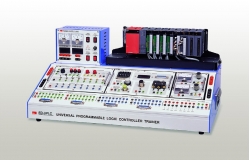
UNIVERSAL PLC TRAINER ED-UPLC

• Docking System architecture separating the main body from PLC modules
• Various types of Programmable Logic Controller experiments
• Modular structure for convenient storage and mobility
• Built-in multi connection device compatible with world’s famous PLC brands


TELECOMMUNICATION TRAINER ED-2960

• 7 experimental modules with a mainframe console
• Harmonic Analysis and Superheterodyne Receiver experiments
• PCM(TDM), Sample Hold, and Delta Modulation experiments


AM TRANSCEIVER TRAINER ED-3400

• HF band(3.5~12MHz)
• Transmitter and Receiver modules for each circuit stage
• Graphical latour of the block diagrams, plus LEDs and test points
• Covers Push-to-Talk and helps understand short wave communications


ELECTRONIC COMMUNICATION TRAINER ED-2950

• 10 experimental modules with a mainframe console
• Basic concepts on the communication systems
• Experiments on the broadcast frequency band tuning
• Generation of AM and FM waves and detection theory


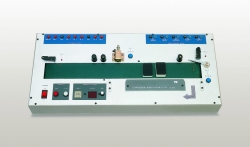
CONVEYOR CONTROL SIMULATION UNIT CU-4001

• Belt-type conveyor simulator
• Control Modes : manual or automatic by programmable Logic Controller
• Three photo sensors and two motion solenoids


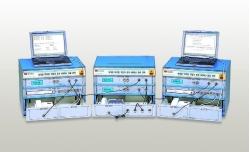
ADSL TRAINING SYSTEM ED-NET-2

• Study of functions, characteristics, installation, repair and maintenance of basic ADSL components such as Telephone Exchange, Splitter, DSLAM, ADSL Modem, HUB and LAN Card
• Network structure through interworking experiments with Internet and capability of Internet usage and simple programming
• Capable of interworking experiments with ED-NET-3(LAN Training System)


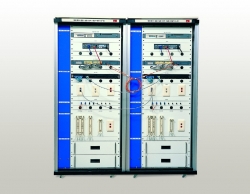
NETWORK TRAINING SYSTEM SERIES ED-NET4-X

• Step by step courses on the networks theories to train the engineers
• CISCO Router based training will help obtain CCNA, CCNP, CCIE certificates
• Functions and characteristics of network system(LAN Card, Router, L2 Switching Hub, L3 Switching Hub)
• 19Rack type structure for effective network configuration
• Optimized learning system for the Router based on one on one training(OPTION)


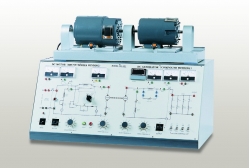
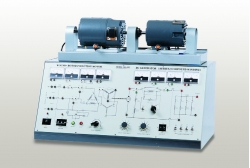
DC MOTOR/ GENERATOR MG-5211

• Load characteristics of DC compound motor
• Cumulative compound and differential compound characteristics
• Generator’s rotating speed and output characteristics
• Loss and efficiency of DC compound generator


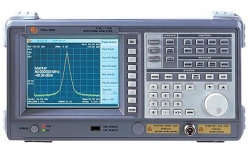
ED PSA-3000 SPECTRUM ANALYZER 9 KHZ..3 GHZ

• High-performance digital synthesizer method
• Wide Frequency Coverage : 9 kHz ~ 3.0 GHz
• Superior Resolution : Minimum 1 Hz
• Compact & Portable size
• Pre Amp as standard
• Wide Input Dynamic Range : -130 ~ 20 dBm
• Various and Convenient Interfaces : USB, LAN


WOUND-ROTOR INDUCTION MOTOR/ DC GENERATOR MG-5213

• Load characteristics of shunt-wound and compound generators
• Generator’s speed and output by winding type
• Loss and efficiency comparisons by winding type