Privacy policies
GDPR data Terms of use Cookies policy Privacy policy Delivery and Payment How to order?
Privacy policies
GDPR data Terms of use Cookies policy Privacy policy Delivery and Payment How to order?

Code: Seba-KMT Fault-Sniffer
 Datasheet
 PDF, 0.43 Mb
Description
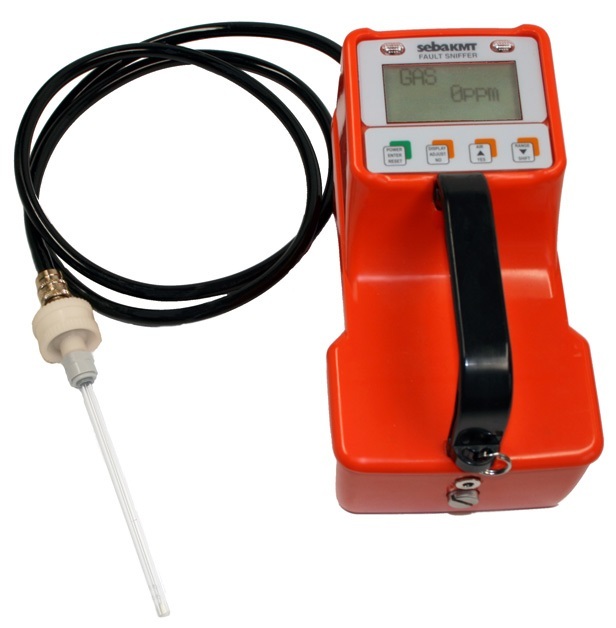
FaultSniffer Cable fault pinpointing in low voltage networks
Benefits
Customers can stay connected
Fault location with no supply interrupt
Reliable avoidance of incorrect excavations
Fast and easy location of faults
All the benefi ts at a glance
Can be used on straight or branched networks
Handy size, easy to transport
No pre-location required
Accuracy in the decimetre range
Sensitive to several specifi c gases and therefore suitable for any insulation material
Description
In many situations, conventional fault location is impossible,
for example when the electrical supply cannot be disconnected
or the necessary fault location system is temporarily
unavailable.
This is where the FaultSniffer enables you to locate the fault
quickly without interupting the power supply.
How? It’s simple!
Each cable fault burns the insulating material. This produces
gases which spread in the ground and can be measured
even after days or weeks.
The FaultSniffer is optimised to locate these combustion
gases, which are produced from any type of insulation material
and therefore are a reliable indicator of the fault.
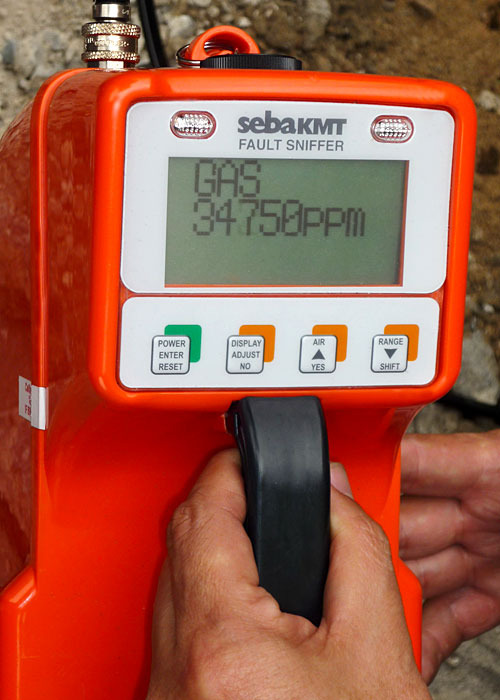
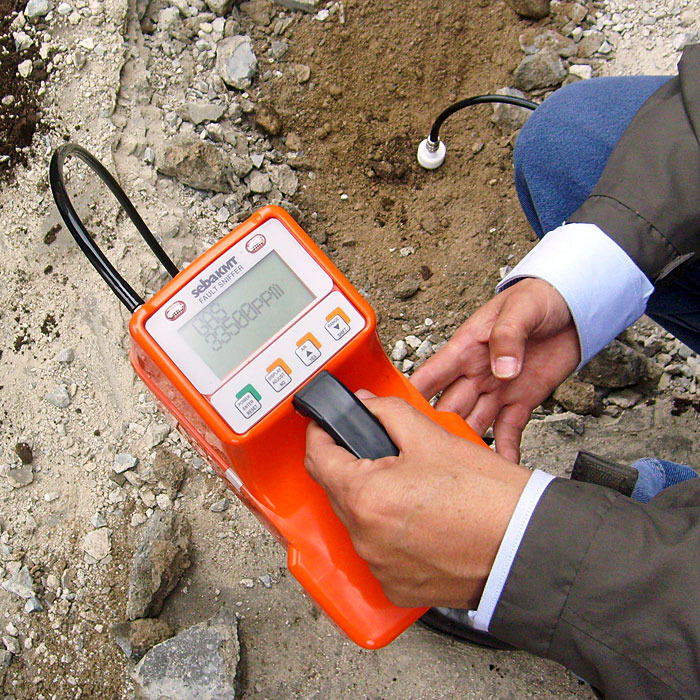
A simple push-button measurement in the vicinity of the fault
shows the concentration of these gases. The fault is located
where the concentration is highest.
The power customers can remain connected to the supply
during the measurements with the FaultSniffer - no disconnection
is required.
The precision is approximately a spade’s width, depending
on the type of soil, the surface and the nature of the fault.
Because the FaultSniffer has a range of many metres and the
distances in low-voltage networks are usually short, a prelocation
of the fault is not normally necessary.
The device is very easy to use and no specialist with electrical
knowledge or switching permissions is required.
The FaultSniffer is not intended to replace conventional fault
location but is a fast, simple and inexpensive supplement and
alternative which does not disrupt the electricity supply.
Standard accessories
Scope of supply
FaultSniffer with connecting hose
Basic accessories and supplies:
10 x sensor tubes, 1 x tube adapter, 10 x fi lter papers,
1 x O-ring
Mains charger for internal battery
Car charger for internal battery
Carry-bag for device and basic accessories
Recommended options
Options
Battery powered hammer drill
Drill extension
Set of consumable spares, consisting of:
1 x 2-component casting compound,
5 x SDS bits 8 x 200 mm, 10 x sensor tubes,
1 x tube adapter, 10 x fi lter papers, 1 x O-ring
More products SEBAKMT
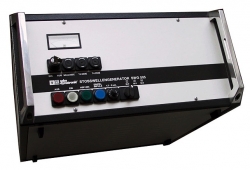
SEBA SWG 505 SURGE WAVE GENERATOR FOR FAULT LOCATION IN CABLES SWG505
• Voltage Ranges : 0.. 3kV / 4kV / 5kV |
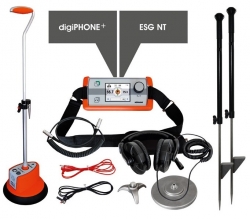
SEBA DIGIPHONE+ ESG NT PINPOINTING ACOUSTIC PINPOINTING SET FOR STEATH FAULT LOCATION IN UNDERGROUND CABLES
• Perfect acoustic quality and noise immunity |
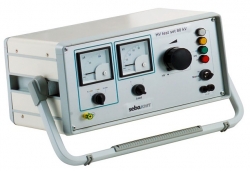
SEBA KMT HV TEST SET 50KV 80KV 110KV DC HIGH VOLTAGE TESTER
• available in three versions: 50kV 80kV 110kV DC |
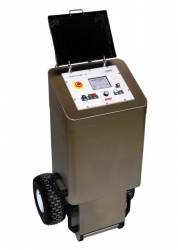
SEBA SMART THUMP 16 CABLE FAULT LOCATION SYSTEM ON LOW AND MEDIUM VOLTAGE CABLES
• 1500J at 8 / 16 kV, 16 kV DC-HV proof test 23/46mA Burning |
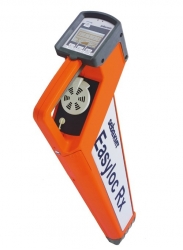
SEBA KMT EASYLOC RXTX PIPELINE LOCATION AND TRACING FOR UNDERGROUND PIPES AND CABLES
• Make optimum preparations for your building work, quickly and reliably |
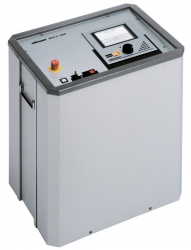
SEBA SFX 5-1000 SPG 5-1000 CABLE FAULT LOCATION SYSTEM ON LOW AND MEDIUM VOLTAGE CABLES
• ICEplus for the easy and reliable fault prelocation without interference from branches |
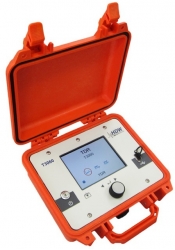
SEBA TELEFLEX T3060 SINGLE-PHASE POWER CABLE REFLECTOMETER T 3060
• Range 8 km, 64 km (for ICE and Decay only) |
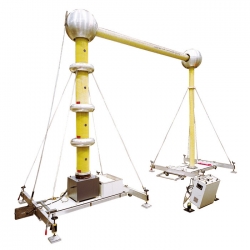
SEBA KMT T26/1 T26/1A T26/1B T26/1C HIGH VOLTAGE CABLE TESTING
• DC voltages of up to 400 kV and 650 kV |
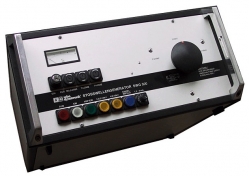
SEBA SWG 500 SURGE WAVE GENERATOR FOR FAULT LOCATION IN CABLES SWG500
• Voltage Ranges : 0..2.5kV / 5kV / 10kV ; 0..4kV / 8kV / 16kV |
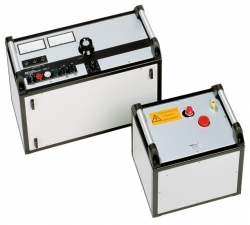
SEBA KMT HPG 70-K 70KV DC HIGH VOLTAGE HIPOT TESTER
• fully insulated test set for DC testing up to 70 kV |